Professional Accreditation
Applications for CME and CPE accreditation have been submitted to the relevant professional bodies. Approved accreditation points will be published once confirmation has been received.
Advancing Care Across Disciplines Together – our Masterclasses and Hands On workshops
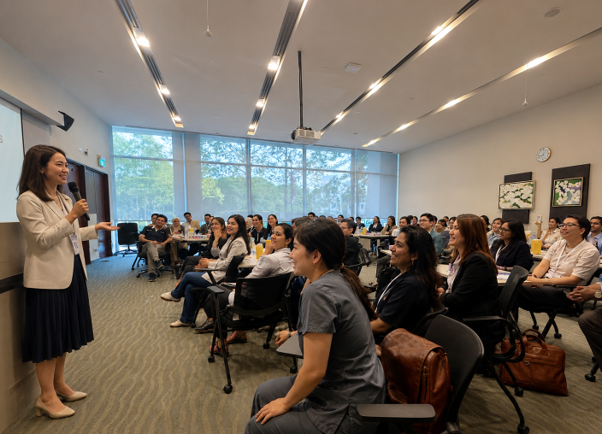
The NUH International Ophthalmology Scientific Congress 2026 offers a series of immersive, multidisciplinary and hands-on educational experiences designed to advance contemporary ophthalmic practice.
Through cadaveric surgical workshops, imaging masterclasses, multidisciplinary teaching courses and simulation-based learning, participants will engage with leading international faculty across evolving areas of Thyroid Eye Disease (TED), orbital surgery, endocrine collaboration, ophthalmic imaging and procedural ophthalmic care.
These sessions emphasise practical application, collaborative learning and real-world implementation, with the goal of equipping participants with transferable knowledge, skills and frameworks adaptable across diverse healthcare settings.
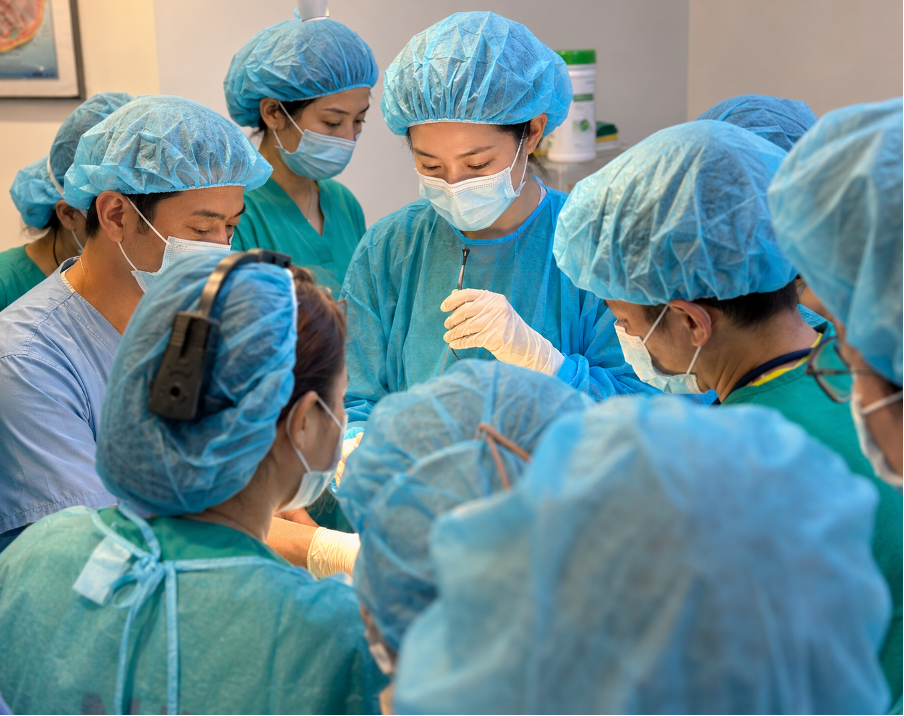
- TED Cadaveric Surgical Masterclass
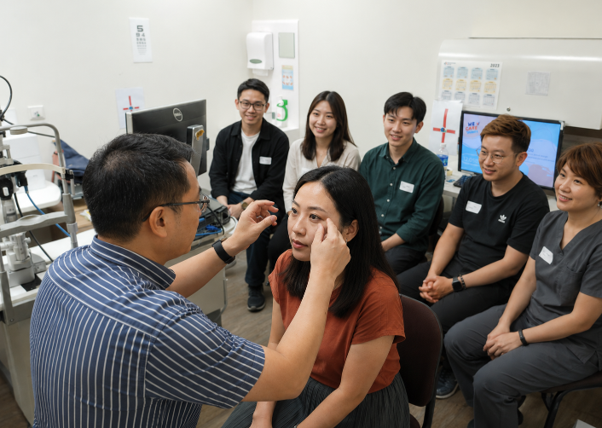
- Inaugural NUH-EUGOGO Teaching Course
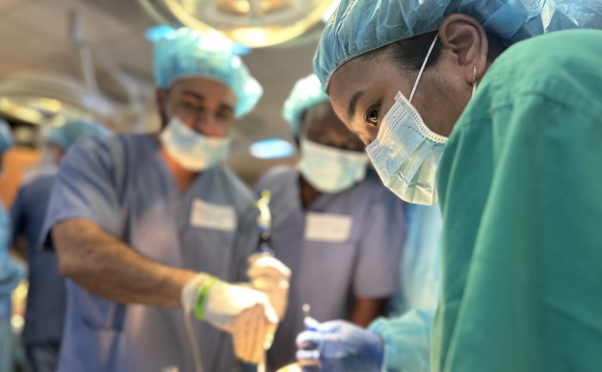
- Beyond the Collar: Advanced Thyroid Surgery Cadaveric Masterclass
- Ophthalmic Oncology and Imaging with the Masters
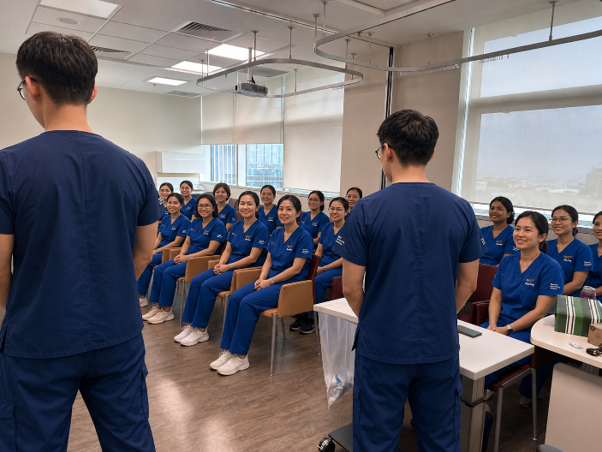
- Beyond the Procedure: Ophthalmic Nursing Hands-on Course and Forum
TED Cadaveric Masterclass: Orbital Decompression, Eyelid and Strabismus Surgery (Hands-On)
Date: 22nd October 2026 (Thursday)
Time: 7:30 AM – 5:30 PM
Venue: Khoo Teck Puat Advanced Surgery Training Centre (ASTC),
Address: National University Hospital (NUH)
5 Lower Kent Ridge Road, Kent Ridge Wing Level 2, Singapore 119074
Early Bird Fee: SGD $1500 - SGD $2000
Standard Fee: SGD $1,750 - SGD $2,250
Format: Full-Day Advanced Cadaveric Hands-on Workshop
Brief
The surgical rehabilitation of TED requires precise understanding of orbital anatomy, surgical timing, multidisciplinary coordination and functional-aesthetic balance. With increasing complexity in modern TED management, surgeons must navigate controversies surrounding decompression philosophies, staged versus combined rehabilitation, strabismus correction and eyelid optimisation.
This immersive cadaveric workshop combines expert-led demonstrations, supervised dissection and surgical video teaching to provide participants with practical approaches to contemporary TED surgery.
Participants will perform hands-on dissections involving orbital decompression techniques, strabismus surgery principles, eyelid rehabilitation procedures and periocular reconstructive approaches, while integrating decision-making frameworks relevant to real-world multidisciplinary TED care.
Learning Outcomes
By the end of this workshop, participants will be able to:
-
Identify key surgical anatomy relevant to TED rehabilitation surgeries
- Compare differing philosophies and techniques of orbital decompression.
- Apply practical approaches to TED-related strabismus management.
- Perform eyelid rehabilitation techniques in cadaveric simulation.
- Develop integrated surgical sequencing strategies for complex TED patients.
Educational Strategies
- Cadaveric dissection stations
- Faculty-guided surgical demonstrations
- Small-group surgical coaching
- Case-based surgical planning
- Interactive MDT discussions
- Surgical video analysis
- Pearls and pitfalls sessions
Intended Audience
Oculoplastic surgeons, orbital and oculofacial surgeons, strabismus surgeons, fellows, trainees and multidisciplinary TED teams.
Participant Take-Home Resources
- Surgical planning algorithms
- Stepwise decompression frameworks
- Anatomical guidance and instrument handling
Inaugural NUH-EUGOGO Teaching Course (Singapore) and Advances and Controversies in TED: A Global Perspective
Date: 24th and 25th October 2026 (Saturday & Sunday)
Time: 8:30am - 7:00pm (24 Oct) and 8:30am - 5:00pm (25 Oct)
Venue: NUHS Tower Block
Address: 1E Kent Ridge Road, Singapore 119228
Early Bird Fee: SGD $250 - SGD $350
Standard Fee: SGD $300 - SGD $400
Format: Interactive Multidisciplinary Teaching Course
Brief
TED continues to evolve rapidly with emerging targeted therapies, evolving disease classifications and ongoing debates surrounding imaging, disease activity, timing of intervention and multidisciplinary rehabilitation.
This NUH-EUGOGO aligned teaching course brings together international experts to explore contemporary evidence, controversies and practical management strategies in TED. Through case-based discussions, audience polling, imaging interpretation and multidisciplinary panels, participants will critically evaluate modern approaches to diagnosis, medical therapy, rehabilitation and long-term care.
Special focus will be placed on translating evolving evidence into practical patient-centred management across diverse healthcare systems.
Learning Outcomes
Participants will be able to:
- Apply contemporary frameworks for TED classification and activity assessment.
- Interpret imaging findings relevant to disease severity and management.
- Compare targeted therapies and multimodal medical treatment strategies.
- Evaluate controversies in surgical timing and rehabilitation.
- Develop multidisciplinary care pathways adaptable to local institutions.
Educational Strategies
- Interactive expert panels
- Audience polling
- MDT case discussions
- Clinical workshops
- Debate sessions
- Real-world management scenarios
Intended Audience
Ophthalmologists, endocrinologists, immunologists, radiologists, trainees, nurses and allied health professionals involved in TED care.
In Collaboration With

Beyond the Collar: Advanced Thyroid Surgical Approaches (Hands-On Cadaveric)
Date: 23rd October 2026 (Friday)
Time: 7:30 AM – 5:00 PM
Venue: Khoo Teck Puat Advanced Surgery Training Centre (ASTC),
Address: National University Hospital (NUH)
5 Lower Kent Ridge Road, Kent Ridge Wing Level 2, Singapore 119074
Fee: TBA
Format: Multidisciplinary Surgical Masterclass
Advanced Surgical Approaches in Graves’ Disease
As part of the main programme in Singapore, we are pleased to present a dedicated Endocrine Surgery Cadaveric Workshop, organised in collaboration with EUGOGO (European Group on Graves’ Orbitopathy).
Surgery remains an important component of the multidisciplinary management of Graves’ disease, particularly in patients with significant orbitopathy, large goitres, suspicious thyroid nodules, relapsed disease, medication intolerance or a preference for definitive treatment. Total thyroidectomy provides a rapid and definitive cure of hyperthyroidism, eliminating the possibility of recurrent hyperthyroidism following antithyroid drug therapy.
An additional consideration in patients with Graves’ orbitopathy is the autoimmune nature of the disease. Thyroidectomy removes the principal source of thyroid antigen and is associated with a substantial decline in circulating TSH-receptor antibodies (TRAb). High TRAb titres are an established risk factor and biomarker for Graves’ orbitopathy.
Current EUGOGO recommendations recognise thyroidectomy as a preferred treatment option in patients with mild active Graves’ orbitopathy, while patients with moderate-to-severe active disease generally require treatment of the orbitopathy before definitive treatment of the thyroid. Avoidance of radioactive iodine may also be particularly attractive in patients at risk of orbitopathy progression, given the recognised association between radioactive iodine and increased TRAb levels and orbitopathy activity in susceptible patients.
With advances in surgical technique and perioperative technology, thyroidectomy can now be performed with excellent safety outcomes in experienced, high-volume centres. Intraoperative nerve monitoring, meticulous capsular dissection and technologies such as near-infrared autofluorescence for parathyroid identification have further enhanced strategies for preserving the recurrent laryngeal nerves and parathyroid glands.
This workshop provides participants with an opportunity to explore contemporary surgical techniques for Graves’ disease through focused didactic teaching followed by hands-on cadaveric dissection. The programme has been designed to bridge the gap between theoretical knowledge and operative practice, with emphasis on surgical anatomy, technical considerations, patient selection and strategies for safe thyroid and neck surgery.
Workshop Highlights
The cadaveric programme will focus on three key surgical approaches:
1. Endoscopic BABA Thyroidectomy
Participants will be introduced to the bilateral axillo-breast approach (BABA), including relevant surgical anatomy, patient positioning, creation of the working space and key steps of endoscopic thyroidectomy.
The bilateral axillo-breast approach (BABA) provides a remote-access route to the thyroid while avoiding a visible cervical incision. By using bilateral axillary and periareolar access points, the approach provides a relatively symmetrical working trajectory to both thyroid lobes and the central neck.
A particular strength of BABA is its familiar anterior view of the thyroid and bilateral neck, allowing the surgeon to approach both lobes through a relatively similar operative field to conventional thyroidectomy. The approach also provides excellent magnified visualisation of important structures, including the recurrent laryngeal nerves and parathyroid glands. Robotic platforms further enhance the approach through three-dimensional magnified vision, wristed instruments and improved instrument articulation, facilitating precise dissection in the confined operative space.
The technique does requires understanding of the remote-access anatomy and creation of a large subcutaneous working space. Its learning curve, operative time and patient-selection considerations make cadaveric training particularly valuable, allowing participants to appreciate the surgical planes and spatial relationships before applying the technique in clinical practice.
2. Transoral Endoscopic Thyroidectomy Vestibular Approach (TOETVA)
The workshop will provide practical exposure to TOETVA, including the transoral approach, establishment of the working space, identification of critical anatomical structures and important technical considerations for safe endoscopic thyroid surgery.
TOETVA represents a truly scarless thyroidectomy approach with no external cervical or chest scars, and excellent cosmetic outcomes. It utilises the oral vestibule as the access route to the neck and provides a short and relatively direct pathway to the thyroid and the central compartment. TOETVA has been successfully applied to selected patients with Graves’ disease, with published series demonstrating its technical feasibility and comparable short-term surgical outcomes to open thyroidectomy in experienced hands.
The transoral route introduces unique technical considerations, including creation of the working space, maintenance of orientation, protection of the mental nerves and management of the oral access site. Hands-on cadaveric dissection provides an opportunity to understand the anatomy, develop three-dimensional spatial awareness and practise the steps of the approach in a controlled environment.
3. Open Modified Radical Neck Dissection
Participants will also perform cadaveric dissection of an open modified radical neck dissection, with emphasis on cervical surgical anatomy, identification and preservation of critical structures, lymph node compartmentalisation and principles of oncological neck dissection.
Didactic Teaching + Hands-On Dissection
The workshop will follow an interactive format designed to maximise practical learning.
Each of the three surgical components will begin with a 15-minute focused didactic lecture, covering the relevant anatomy, operative principles, technical steps and key surgical considerations. This will be followed immediately by hands-on cadaveric dissection, allowing participants to apply the concepts discussed during the lecture under faculty guidance.
The faculty will comprise predominantly experienced local endocrine surgeons, providing participants with the opportunity for close interaction and practical discussion throughout the cadaveric sessions.
Who Should Attend?
The workshop is intended for surgeons and surgical trainees with an interest in endocrine surgery, thyroid surgery and contemporary approaches to the surgical management of Graves’ disease.
Participants will have the opportunity to:
- Review and understand relevant surgical anatomy in a cadaveric setting
- Learn the operative steps of BABA and TOETVA thyroidectomy
- Practise the key steps of open modified radical neck dissection
- Discuss surgical decision-making, patient selection and technical challenges with experienced endocrine surgeons
- Translate didactic teaching into practical operative experience through supervised cadaveric dissection
Observer Participation
For participants who are unable to commit to hands-on dissection, paid observer-only positions will also be available.
Observers will be able to attend the didactic lectures and observe the cadaveric demonstrations and participant dissection sessions, providing an opportunity to gain exposure to these surgical approaches without participating directly in the hands-on component.
Certification & CME
All participants will receive a certificate of participation.
CME hours will also be provided, subject to the relevant accreditation requirements.
We look forward to welcoming surgeons and trainees to Singapore for an engaging programme combining the multidisciplinary principles of Graves’ disease and Graves’ orbitopathy with practical exposure to contemporary endocrine surgical techniques.

Ophthalmic Oncology and Imaging With The Masters: Ultrasound, CT Scan, MRI, FFA, OCT and More (Hands-On)
Date: 22nd October 2026 (Thursday)
Time: 2:00 PM – 5:30 PM
Venue: NUHS Tower Block, Level 1, Seminar Room T01-01
Address: 1E Kent Ridge Road, Singapore 119228
Early Bird Fee: SGD $75 - SGD $100
Standard Fee: SGD $100 - SGD $125
Format: Interactive Imaging Masterclass
Brief
Advances in ophthalmic imaging have transformed diagnostic precision in orbital, ocular and periocular disease. However, selecting appropriate imaging modalities and integrating findings into clinical decision-making remain challenging.
This practical imaging masterclass focuses on ultrasonographic B-scan imaging alongside multimodal orbital and ophthalmic imaging approaches. Participants will engage in hands-on interpretation sessions, live demonstrations and case-based discussions involving orbital tumours, inflammatory disease, retinal pathology, trauma and ocular emergencies.
The course emphasises practical interpretation, diagnostic algorithms and real-world application across diverse clinical settings.
Learning Outcomes
Participants will:
- Interpret key ultrasonographic B-scan findings in ophthalmic disease.
- Compare imaging modalities relevant to orbital and ocular pathology.
- Apply imaging findings to clinical and surgical decision-making.
- Recognise limitations and pitfalls of ophthalmic imaging.
- Develop structured imaging approaches for common ophthalmic presentations.
Educational Strategies
- Imaging interpretation workshops
- Live demonstrations
- Case-based learning
- Interactive polling
- Diagnostic algorithm exercises
Intended Audience
Ophthalmologists, radiologists, trainees, optometrists and allied eye care professionals.
Ophthalmic Nursing Hands-on Course and Forum
Beyond the Procedure: Advancing Ophthalmic Nursing in Intravitreal Therapy, Dry Eye & Procedural Care
Date: 24th October 2026 (Saturday)
Time: 8:30 AM – 3:30 PM
Venue: NUHS Tower Block
Address: 1E Kent Ridge Road, S119228
Fee: SGD $30
Format: Interactive Nursing Symposium & Skills Workshop
Brief
Ophthalmic nurses play a critical role in delivering safe, efficient and patient-centred eye care across increasingly complex treatment pathways. As intravitreal therapies, ocular surface treatments and ambulatory procedures continue to expand, nursing competencies in procedural care, patient education and multidisciplinary coordination become increasingly important.
This interactive symposium combines expert teaching, hands-on procedural stations and practical workflow discussions to strengthen ophthalmic nursing skills in intravitreal injection support, dry eye management and outpatient procedural care.
Participants will explore safety frameworks, patient counselling, procedural optimisation and emerging technologies relevant to contemporary ophthalmic nursing practice.
Learning Outcomes
Participants will:
- Apply best practices in intravitreal procedural support and safety.
- Develop practical approaches to dry eye assessment and treatment workflows.
- Strengthen patient communication and counselling strategies.
- Recognise complications and escalation pathways in ophthalmic procedural care.
- Explore evolving nursing roles within multidisciplinary ophthalmic services.
Educational Strategies
- Hands-on skills stations
- Simulation-based learning
- Small-group teaching
- Interactive demonstrations
Intended Audience
Open to all nurses